Saturday, August 22, 2009


My new blog, with Heather Davis, is
Shenandoah Breakdown
(http://shenandoahbreakdown.wordpress.com/)

Excerpts from The Edge of the World will be continued at some point in the future; and I will, from time to time, post other material here.

Thursday, October 30, 2008

P-Funk Reshapes the Landscape of the Redneck Town I Live In and Other Acts of Reformation and Reconstruction


Behind the wheel listening to P-Funk in my new neighborhood
the blank stare of the shirtless Larry the Cable Guy lookalike sharpens
to crystal clarity as his lazy slouch straightens up into a confident
strut and the words Git-R-Done are banished forever from his lips.

The colors start to run on the confederate flag bumper sticker
on the pickup truck ahead of me, its starry X melting like
the Wicked Witch of the West turning into a smelly puddle of scum.
Having freed my mind from the “Our God is an Awesome God” sounds

that limp through the streets from the doorway of the Heaven Sent Shoppe
downtown until it oozes like toxic waste into the Shenandoah River, having
been lifted from the list of endangered species by a bop gun blast,
I am ready to stand tall in my off-white glory and the knowledge that

God does not appreciate those lame-ass Christian pop songs. I step
out of my minivan, open the back door and take my daughter
by the hand. “Who sang that song?” I ask and right away she
answers “P-Funk” because I’m trying to teach her what’s well

and what’s real and we glance at our house, stop and wave to
our neighbors, then together we turn to walk towards the future.

- Jose Padua
-------------------------------------------
The next excerpt from The Edge of the World will be posted next month.

Saturday, June 10, 2006

Angel


I am an angel. I live in outer space but you call it
Heaven. I sit immobile but you think I have wings.
Though I watch your every move, I have no stake
in your health or happiness. Though I manifest
my being in every moment of your lives, my actions
are petty and trivial. When you walk through the park
on the first warm day of spring, I’m the force
who makes the pigeon shit on your head.
When you sit in a stall in a public restroom
I’m the power who makes the toilet paper disappear
at the moment you’re ready to wipe.
I’m the desire that drives the cute little five year old
to give you the finger when you smile at him.
I am the knowledge that no matter what line
you pick at the supermarket it will be the slowest.

I am the reason Celine Dion is a huge star, the reason
your penis is two inches long, the reason your breasts
are as flat as the Great Plains. I am the bitter aftertaste
in sugar substitutes, your morning hangover. I am dandruff,
an ingrown toenail, a speck of dust in your eye, a pebble
in your comfortable new shoes. I am the fitful sleep in which
you dream and find yourself falling from a mountain.
I am the revelation in which you discover that you are
neither great nor original but empty-headed and common.

As for those greater catastrophes, those fatal accidents,
those terminal diseases, poverty, war, and famine, I stake
no claim. I compose neither good nor evil, justice nor injustice,
but convenience and inconvenience. All my works are shallow and trite.

I am merely an attendant, serving the way I was meant to serve.
following the orders of a monarch who devotes his time to greater things.
And when sirens echo in the distance I do not hear them.
When rivers overflow I do not see them washing away your cities.

In the beginning was the darkness, then came the light.
Though I am of that light I do not help you see.
And as you walk through your world as if blind, I give you
no hint of what’s to come, no sign telling you to go or to stop—
just an aching in your bones, the self-conscious knowledge
that somewhere, in the middle of this universe,
away from the greatness of kings, you exist.

Tuesday, April 04, 2006

FACE


1. Dear god grant me the strength
to destroy the things I can destroy,
words to deface the things I can't,
and wisdom to get away with it.

2. This is for the space between words, the slow
fall of mountains leaving the remains of giants.
There are wars we remember that took place in
our back yards, days when we thought we moved
backwards. The storyline has only been suggested,
through hints of color, and weather mentioned in passing.

3. I am so blown away by your concept of space.

4. There are images one gets lost in, images one
can breathe, a landscape in colors and stars,
the names you can’t remember. The clouds darken
over the sea surge. Seagulls climb on gusts of wind
as the night turns over into silence. The dream
of canyons, the dream of forgetting—I become
a new person, with no history, no origin, and a million
possible paths to take ahead of me, into the horizon.

5. What's wrong with your face?

Saturday, February 11, 2006

Miss Tahiti 1981


They stand there throwing lines at each other
inside the TV set. The music blazes
inside my head as a beautiful girl water skis.

"This music would be good to hear on the radio
while waking up, in a state of half-sleep."

I have a definite lust for life. Even here
in my room, set apart from all stages, I can feel
the so-called outside events, the latest American tragedy
and the heat, the rush of the leaves.

"Don't dance in Kansas City."

"Stay away from strange mist on the sea."

Because Miss Tahiti 1981 is the most beautiful girl I've seen today.

I carry burdens with me when I walk and the streets
aren't so mellow, though they too age along with
every oak and sparrow.

"New faces every day, new columns on buildings,
and words."

Miss Tahiti has one of those faces you'll remember
a long time, which is where her immortality lies.

If I don’t follow her advice I am so fucked.

Monday, January 23, 2006

After The Party (1992)


Drunk at four in the morning
my friend Eddie and I
are sitting in this young woman’s apartment
watching a Depeche Mode video.
On the floor in front of the TV
some guy she knows
is passed out and snoring
while she sits on the sofa
telling us we should pay attention
to the lyrics being lip-synched
by a skinny English guy
with a fancy haircut.
She’s sweet, bright
and still full of the
subtle energy of youth,
and though Eddie and I are each
mad about her in
varying degrees
we realize that watching
a Depeche Mode video
with her at four a.m.
as some amateur drunk
snores on the floor
is just a bit too much to take,
so we leave.

We walk down to the 7-11
and buy some cigarettes,
some bread, and two packages
of canned meatballs with gravy.
We go back to his place,
throw the meatballs with gravy
into a pan, add some cheese,
some leftover spaghetti,
some soy sauce,
and, after a moment’s thought,
throw the bread in the pan as well.
We’re starting to sober up now,
but we’re hungry
and this weird mix is, after all,
food of some sort.

Later, after finishing
every last bit of it,
we’re sitting at the table
saying nothing.
We’re both starting to
feel sick and depressed.
I wash the meal down
with a glass of water
and light a cigarette
as Eddie stares
at his empty plate.

Suddenly Eddie stands up,
walks over to the trash can,
and pukes for a full minute
or two.
When he’s done
I walk over to the refrigerator
and grab two cans of beer.
I crack them open and
set one down in front of Eddie.
He looks up at me,
wipes his mouth
with the back of his hand,
and with the light of dawn
coming in through the window
he says, “Shit, man,
It’s a brand new day.”

So we have a toast:
to canned meatballs with gravy,
to all night parties,
to amateur drunks,
to England and its fancy haircuts,
to all the pretty young girls in the world,
and to the sun
which rises high in the sky
over us all.

Saturday, January 07, 2006

BOB BACKLUND: Politics, Madness, and A Good Clean Shave in The Heart of Darkness

According to The Book of Revelation 13:5, "The beast was given a mouth for uttering proud boasts and blasphemies, but the authority it received was to last only forty-two months." After coming back from hibernation, Bob Backlund's authority as the World Wrestling Federation's number one Beast lasted only four days. But then this is the nineties, and despite the best efforts of the wild-eyed fanatics at PETA, a beast doesn't last very long in this era.

But blame that on the times, not on the beast. And, perhaps, on Madison Square Garden. Yes, Madison Square Garden.

For some people Manhattan's Heart of Darkness is Wall Street, where prematurely graying men in business suits nervously pace the floors while the words "buy" and "sell" go through their heads like savage mantras. For others it's the theater district, where the mantras include words like "Cats" and "Grease," and where, in the ultimate act of Broadway blasphemy, a man by the name of Mandy Patinkin has been anointed the Holiest of Holies. But for people like me who've never reached these depths of hell, Manhattan's Heart of Darkness has always been Madison Square Garden, the site of numerous brutal tests of endurance, among which one may count the many bloody wrestling matches, a week long engagement of The Grateful Dead, and the 1992 Democratic National Convention. And for the purpose of shedding some light on Bob Backlund's present situation, it will do us some good to look back at what went on at that convention. Hell, it may even do YOU some good as well.

As we well know, the survivor of that series was Bill Clinton. Having fought off the likes of Paul "Mr. Electricity" Tsongas and Jerry "Spaceman" Brown, Clinton suddenly rose from among the crowd to become The Man. Supporting his rise, amidst a deluge of multicolored balloons and confetti, was a crowd that was riddled with celebrities. Among them: Stephen Stills of the fat boy vocal group Crosby, Stills, and Nash (who presaged the fat boy tag team, Men On A Mission, by over twenty years); Jill Larson, who plays Opal on the soap opera All My Children (you may remember that Jesse "The Body" Ventura, before going the Kojak route, claimed he got his hair done at Opal's Glamorama in Pine Valley); and Bianca Jagger who was hanging out not with Mick ("Double J" Jeff Jarrett's more sophisticated cousin from across the sea) but with fashion poobah Calvin Klein.

A lot of things had changed since 1992, in wrestling and in politics. You'd think that with Hogan Hulk Hogan fleeing the WWF stables and taking with him, among other things, the Mouth of the South and the reconstructed cheekbones of Brutus Beefcake, that Bob Backlund might once again reign supreme in the WWF. Especially since Bob Backlund—once the ultimate do-gooder—is now looking more like the evil spawn of one of Sybil's more damaged personalities and the Marquis de Sade. After all, these are hard times, and it takes someone with a hard heart to make it to the top.

On the night before Thanksgiving, Bob Backlund, having put behind him the petty desire to please the fans, looked like the man to do it. Indeed, things were looking good for Backlund that night—just as they were for Bill Clinton back in 1992. But today it seems like Clinton will be going down in the history books as a single term commander in chief (or Jimmy Carter II). Which means that after four years you won't have Bill "Bubba" Clinton to kick around anymore. Though while Bill Clinton still has a couple of years left, Bob Backlund has already had his four days.

But I'm getting ahead of the story here again, moving on to the sad and terrible aftermath when what we should be doing, for the moment, is concentrating on the good old days. Days we can count on a single hand, with a finger left over to relay a parting gesture to the Heart of Darkness.

The good days began on the night of November 23d 1994, two weeks after an election which saw the defeat of such luminaries as Mario Cuomo and Ann Richards. Back in Washington D.C., having little reason to give thanks, I'd resigned myself to singing the blues, and so took to drowning my sorrows at The New Vegas Lounge, a smoky blues bar ten blocks away from the White House.

Accompanying me were two fellow writers, Eddie Dean and Jim Rogers, who ordered beer after beer while I tried to negotiate my way through the evening with a cheap Jack Daniel's substitute. Despite our attempts at frugality, we were overcharged for our drinks and treated like the demons who made it necessary to sing the blues. But maybe that was the price we had to pay, because in addition to the pick up blues band that was playing that night, The New Vegas Lounge had, showing on the television with the sound turned off, The WWF Survivor Series.

As my friends didn't have much interest in wrestling, they busied themselves watching a guitar player by the name of Sky Shaw break into a rendition of "Crossroads." All the while my eyes were glued to the TV set, and when Bob Backlund applied the chicken wing to Bret Hart, I let loose with a hearty, "Break his neck, Bob!" Eddie looked over to me and asked, "Who's that?"

"That's Bob Backlund," I said reverently. "But I like to call him The Beast."

When Stu and Helen Hart walked over to ringside to throw in the towel it looked like the good times were back again, because Bob Backlund was, once again, the WWF Champion. Holding both the belt and his head high, Backlund looked down upon the masses and with a single facial expression said what would always take Bret Hart an entire interview to say: "I am the best."

Back in the New Vegas Lounge the band stopped playing and the other bar patrons stood in silence, gazing upon the perfect countenance of Bob Backlund. My friend Jim Rogers, who had finally found his curiosity piqued by the happenings on the television screen, held his head up high in turn and declared, "Now that's a guy who looks like a champion! The other guy's just another greaseball loser." Which goes to show what was always part of Bob Backlund's charm: whether he was being good or being bad—whether he was babyface or Beast—even people who weren't fans of wrestling knew that he was real thing, while someone like Hulk Hogan was nothing more than a Saturday morning cartoon character.

With Backlund back where he belonged, I went up to New York the following Sunday to see for myself the new champion defending his belt against Diesel, the overgrown meter man from the gas company, ready to celebrate Bob Backlund's first successful title defense.

Getting off the train at Penn Station in New York, I relished the memory of the past four days, days that brought back a air of wealth and good feelings. But just as Madison Square Garden would eventually work its curse on Bill Clinton, so it would on The Beast.

Possessing more wrestling skill in a single raised eyebrow than Diesel has in his entire seven foot body, Backlund should have been able to make quick work of Diesel. But this was Madison Square Garden. And while Bill Clinton won his ascendancy at Madison Square Garden, Bob Backlund lost his at that very same space. Because what Madison Square Garden giveth, Madison Square Garden will taketh away—though even if you didn't get it at Madison Square Garden, Madison Square Garden will wrest it from you anyway. It is, after all, The Heart of Darkness, and as such has no sense of mercy, no sense of right or wrong.

Like a Democrat donkey going up against a Republican rogue elephant, Backlund tried to take his stand. He used all the weapons he had at hand—an arm whip, an elbow smash, a monkey flip—but nothing worked, not even his trademark chicken wing, the submission hold that had brought many more skilled opponents to their knees. In the end it was Diesel who prevailed, putting Backlund down for a three count.

But unlike when he lost the belt to The Iron Sheik a decade ago, Backlund shed no tears, did not hold his head in his hands, remorseful that he'd disappointed his fans. No, this time he held his head high.

Back in the dressing room he immediately lathered his face with shaving cream and pulled out a razor. "I've found that it's always a good idea to have a shave after a match," he explained. Even though he's a beast, he's a CLEAN beast. When he was done, he wiped his face, then began reflecting on the night's events. "I have wrestled with Diesel," he said, as he opened up a bottle of Mennon Skin Bracer and splashed the stinging lotion on his cheeks. "It was the most unexciting contest imaginable, taking place in an impalpable grayness, without clamor, without glory, without the great desire for victory, without the great fear of defeat, in a sickly atmosphere of tepid skepticism, without much belief in my own right, and still less in that of my adversary." He paused, then held out his bottle of Mennon Skin Bracer. "Here, have some. It's good even if you haven't just shaved."

Strange words from a strange man. And although some may take these words as a sign of madness, others will contend that Backlund has simply EVOLVED, moving on to a realm where victory and defeat are mere words—words which are of no concern to him. But maybe that's just because his work in this world is done; and after going through a perfunctory series of rematches with Diesel, Bob Backlund—The Beast—will disappear again.

But then you may remember that according to The Book of Revelation there is a second beast, a beast that will force "all men, small and great, rich and poor, slave and free, to accept a stamped image on their right hand or forehead." A beast that "will not allow a man to buy or sell anything unless he is first marked with the name of the beast or with the number that stood for its name." Maybe it's also a beast that will find a way to survive The Heart of Darkness.

Of course it's possible that that beast will just be Bob Backlund again, this time wearing a mask. And a different aftershave. Something like Brut.

****************************************************

Originally published, in June, 1995, in Wrestling World. A lot of this story is actually true. Stephen Stills, soap opera actress Jill Larson, and Bianca Jagger (accompanied by Calvin Klein), were, like me, among the guests at the 1992 Democratic Convention at Madison Square Garden in New York. And I actually was at the New Vegas Lounge with old friends Eddie Dean and Jim Rogers, watching the wrestling match where Bob Backlund actually did defeat Bret Hart to regain the WWF title. Of course, just about everything else written here about Bob Backlund was completely made up. But that, thanks to my old friend Stephen Ciacciarelli, the former editor of Wrestling World, was the joy of writing about wrestling.

As for Bill Clinton being a one term president, that wasn't fiction. That was just wrong—though at the time things weren't look very good for him (and this was
before Monica Lewinsky).

One final note: Bob Backlund, in 2000, actually ran for the United States House of Representatives. A Republican, he lost. Nowadays, he runs a bail bond company in Connecticut.

Thursday, December 15, 2005

The Erotic Landscape of New York (an excerpt from The Edge of the World)

When I moved to New York City I was struck by the sensuality of the landscape. I mean, I knew about the sensuality of the women there—indeed, when I was just a visitor to the city that was the thing that stood out most in my mind. But only upon moving to New York, and becoming a resident, did I begin to fathom that the physical structure of the city itself was rife with concupiscent images.

First were the twin towers of the World Trade Center. Seeing them on the drive into town they seemed like mere skyscrapers, nothing more than concrete, steel, and glass. It was an image that bespoke not of sensuality but of those decidedly non-erotic activities of business and industry. Yet, beholding the towers from a closer perspective, while standing on the far side of West Street, I began to see something else; and what I saw were a woman's legs, stretched upwards towards the sky as if to anticipate the crucial moment when, spreading them, she allows her lover to enter her.

I often took walks to West Street for this very reason. There was a spot, about two thirds of the way down from Carlisle Street going towards Rector, where the erotic effect was at its most vivid. And in moments of fancy I could practically hear the conversation between this very long legged woman and her unseen lover—conversations in which she would at first tease him, even scold him, before begging, like a desperate woman just set loose upon the soil of Manhattan, to be fucked and fucked hard.

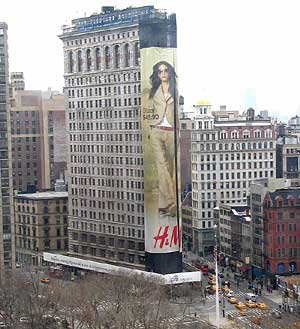
The next area of Manhattan to have erotic implications for me was the neighborhood around the Flatiron Building. Whenever I ventured there I found myself enamored by the fragrance of the neighborhood—though perhaps "fragrance" isn't the right word as "smell" is the word which best describes what entered my nostrils upon my heading up Broadway towards Twenty-Third Street. It was a smell not unlike that which permeates the atmosphere around the open-air fish stalls in Chinatown, which is to say that it was the smell of a woman.

I investigated this matter over the course of a few weeks, at the end of which I discovered that the smell was emanating from The Flatiron Building itself. It seems that through its triangular shape (and through some variety of sympathetic magic), this famous New York structure had become a gigantic working replica of a woman's genitals, with the wide area of the triangle at Twenty-Second Street being the beginning of the pubic region, and the narrow tip at Twenty-Third Street being the entrance to the vagina.

Not surprisingly, I found that gently rubbing The Flatiron Building at this point would cause moisture to seep through the stone. Soon the masonry itself would give way, becoming fleshlike, so that I could insert my fist, or entire arm even, into the building's viscous opening. In fact, on a few very pleasant occasions, I was able to place my entire head into the opening, happily lapping up the building's moisture as I caressed the soft outer masonry with my hands.

Although there were other structures in New York with similar erotic qualities, The World Trade Center and The Flatiron Building were, for me, the most significant. There were days when, despondent over the loss of loved ones, I found my salvation in these solid forms. When, through the static state of their being, I found both comfort and knowledge—and a sense of calm separation from those forms which, by their fleeting nature, eluded me.

And in the strange days which lie ahead—days when the incidents of my past life fade into shapeless anecdotes to go along with the odd trinkets I leave behind—these structures, although they never belonged to me, will be as a legacy bestowed upon my memory, speaking even more than these words of who I am or who I was. And though these great structures may one day be destroyed, their memory will remain, carrying me through an eternity which persists beyond streets and skyscrapers, beyond continents and oceans, beyond the air itself and that final, shiver inducing cataclysm we call The Edge Of The World.


Excerpt originally published in Pink Pages, 1995.

Tuesday, December 06, 2005

A True Star

My friend Michael and I
are sitting at an outdoor cafe
on Avenue A, drinking beer,
when we spot Lady Miss Kier,
the singer of the hot new band
Deee-Lite.
She’s walking down the street
dressed in a psychedelic body suit
which she fills with sweet curves
and pleasant oases of darkness.

Everyone at the cafe,
everyone on the street,
and everyone in the windows
of the buildings on Avenue A
stop eating, drinking, driving
to watch Lady Miss Kier
as she goes by,
and my friend Michael says,
“Now there’s a True Star.”

And with those words I start to wish
that I had the sort of talent
and presence that could give me
such fame and admiration.
But the only talents I have
are for drinking beer
and fucking up.
Very common talents, yes,
but I’m working on
doing them with great style
and in great proportions,
so that one day,
when I walk down Avenue A
to the store to buy beer,
people will stop and say,
“Hey, that guy’s
the biggest drunk in town.”
People will stop their cars
in the middle of the street,
walk up to me and say,
“You’re the guy who came to town
and fucked up REALLY big...
Can I have your autograph?”

“Sure,” I’ll say,
and I’ll sign his copy of
Fuck-Ups Of The Lower East Side
with the words,
“From a great fuck-up
to a little fuck-up.
Here’s looking
down
at you.”

Originally published in Rant, 1993.

Tuesday, November 22, 2005

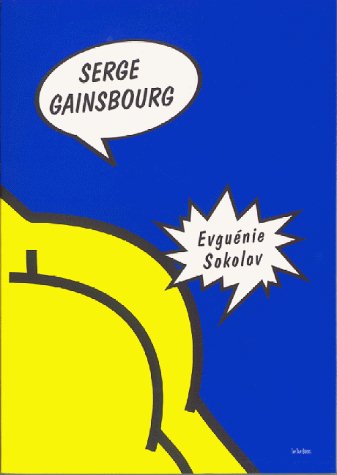
Evguénie Sokolov

by Serge Gainsbourg
translated by John and Doreen Weightman
TamTam Books

Like Charles Bukowski, Lucien Ginzburg was a lecherous dog of a man. Blunt, obscene, and, at times, even childish, both were men of pronounced appetites. Born in Germany in 1920 to an American soldier and a German woman, Bukowski came to the U.S. with his family at the age of three; soon the German tongue, which he had heard everywhere in his first few years, began to slip away from his memory. Born in Paris in 1928, Lucien Ginzburg was the son of Russian Jews who had fled the Bolshevik revolution; in time, Lucien’s father changed the family name from Ginzburg to the more French sounding “Gainsbourg,” with Lucien being reborn as Serge Gainsbourg. Bukowski grew up to work a series of dull, boring jobs before finally becoming a writer; Gainsbourg had a similar work history before he began earning his pay as a musician. And although both were controversial, each came to be highly regarded in their respective fields—in Europe, anyway.

Bukowski eventually gained some measure of respect back in the U.S. But Gainsbourg hasn’t quite made it over here, where for a long time he was known only for “Je t’aime... Moi non plus,” his 1969 song which, featuring the orgasmic moans of his then girlfriend, actress Jane Birkin, created a scandal worldwide. As far as America was concerned, Gainsbourg was a one hit wonder.

Across the ocean, however, his fame continued. Gainsbourg went on to romance the likes of Brigitte Bardot, Catherine Deneuve, and Isabelle Adjani, among others. The list of his lovers goes on and on—not bad for a man no one would describe as a pretty boy. But sometimes it was unrequited lust. As in a video from 1985 where Gainsbourg shared a bed with his teenage daughter, Charlotte, and gazed at her longingly through bloodshot eyes as she sang his song, “Lemon Incest.” Or that time when, during a live French television broadcast, Gainsbourg declared, “I want to fuck you” to fellow talk show guest Whitney Houston.

Gainsbourg was, above all, an honest man. Whether you liked it or not, he said whatever was on his mind, and for that the French awarded Gainsbourg the prestigious Croix d’Officier de L’Ordre des Art et Des Lettres. When Gainsbourg died on March 2, 1991, it was something akin to a national day of mourning in France. Because no matter how much he shocked or provoked, his French audience at the very least appreciated and, in many cases, revered him.

Gainsbourg is now becoming more widely known in the United States. But with the dark irony of his songs being lost when left untranslated, it’s no wonder that those who’ve heard only his early jazz inspired pop songs take him simply as a kitschy performer of French “lounge” music. (As it was, Gainsbourg employed, at various times, elements of jazz, African, rock ‘n roll, reggae, rap, even classical music—the melody for “Lemon Incest,” in fact, was a takeoff from one of Chopin’s etudes).

Recent English language covers of his songs by musicians like Nick Cave associate Mick Harvey haven’t helped much in changing the more limited perception of him. So while in France he was considered “on the edge” by young and old alike (at many concerts he performed towards the end of his life, the audience was made up of a majority of teenagers), here he is still seen as an oddball rather than as a “cutting edge” artist. Gainsbourg himself expected as much, and when asked if he had any plans to perform in the U.S., replied, “Why bother? They wouldn’t understand.” Indeed, as Russell Mael of the band Sparks notes, Gainsbourg’s musical satire isn’t easy for many Americans to “get.”

But music wasn’t Gainsbourg’s only means of expression. He was also a photographer, filmmaker, actor, and writer; and in 1980 Gainsbourg published Evguénie Sokolov—his only (and very brief) novel—which has now been reissued here in the U.S. Like much of Charles Bukowski’s work, it presents a first person narrator who’s a little on the rough side, and places him in a rather preposterous situation—the situation here being that Evguénie Sokolov, a painter, has found that his lifelong malady of excessive flatulence has helped him improve his art:
“...while I was testing my mastery by practicing the drawing of sewing needles with a single movement of the pen—a down stroke, then an upward stroke to open the eye, followed by a down stroke to close it—a particularly violent explosion of wind broke a pane in the glass roof, causing my hand to shake like that of an electrolytic child...”

Seeing that farting while in the act of drawing has bestowed “a dazzling beauty” upon his lines, Sokolov builds a contraption out of a bicycle seat and springs. Sitting on this as he draws, Sokolov quickly produces a series of forty “gasograms” and shows them to the most important art dealer in town who immediately gives him a contract. Sokolov’s fame and marketability as an artist rise quickly. He begins having affairs with both women and men, but soon begins to rely more on prostitutes “who attended to my pleasure without my having to worry about theirs.” He also takes to drinking sweet, old-fashioned cocktails (“Lady of the Lake,” “Baltimore Eggnog,” “Corpse Reviver”) to the point where the combination of alcohol and sugar would lead him to stumble into elevators at the hotels he stayed in and “stare, glassy-eyed, at the floor indicator.” Like Gainsbourg himself, Sokolov is a dissolute character whose vices are highly conspicuous. And, like Gainsbourg, his vices play an essential role in the creation of his art.

Although Gainsbourg described his novel as autobiographical, he admitted to “distortions reminiscent of Francis Bacon’s paintings. Evguénie is a guy who knowingly destroyed himself because he wanted fame, and that fame destroyed him.” Among the distortions are Sokolov’s diet of rotten meat and “slightly ‘off’ fish”—a form of sustenance meant to ensure Sokolov’s grand flatulence and his ability to produce his gas-inspired art—and the consummation of his love for Abigail, an eleven year old deaf mute girl. At any rate, one would hope that these are among the distortions.

What can be said with certainty is that Evguénie Sokolov is not a polite work of literature. Real satire seldom is. And although like a great movie epic it evokes emotions ranging from joy to genuine sadness, Sokolov will never be turned into a big budget Merchant-Ivory production. Nor will it ever be offered as a premium by PBS stations during pledge week. What will happen is that is many who read it will be shocked and disgusted—which is exactly what Gainsbourg would have wanted. “For me, provocation is oxygen,” Gainsbourg once declared.

But unlike the self-indulgent provocations of Madonna, for instance, Gainsbourg’s provocations usually had a purpose, a case in point being his song “Aux Armes Et Caetera,” in which Gainsbourg took the French national anthem and transformed it into a reggae song. Disparaging the militaristic themes of “La Marseillaise,” Gainsbourg’s caustic parody upset everyone from politicians to priests. It also went platinum.

Although Gainsbourg’s musical pranks had serious intentions, he could also be ingenuously playful. “Evguénie Sokolov,” the musical counterpart to his novel, is a three minute “song” throughout which Gainsbourg (backed by famed reggae rhythm section Sly Dunbar and Robbie Shakespeare) lets loose with a series of farting noises. Obviously, there were aspects of Gainsbourg’s personality which never outgrew adolescence. Which is exactly what made songs like “Harley-Davidson” (“I don’t need anyone on my Harley-Davidson/ I recognize no one on my Harley-Davidson/ And if I die tonight/ It’s my destiny and my right”) so exhilarating. And lurking beneath the self-destructive behavior of Gainsbourg’s Sokolov is a similar exhilaration.

The present reissue of Evguénie Sokolov, while welcome, is not without its problems, the most prominent of which are the obvious typographical errors that occur in the printed text. Nevertheless, this edition of Sokolov will go a long way towards helping those on this side of the Atlantic come to interpret, and perhaps even appreciate, Gainsbourg.

As for helping to define him, that’s another matter completely. In his introduction to Evguénie Sokolov, Dutch writer Bart Plantenga describes Gainsbourg as “one part rat pack, one part beatnik, Chet Baker, Sinatra, a dash of Dylan, Leonard Cohen’s pungent growl, Tom Waits’ irrepressible inventiveness, Johnny Rotten’s naughtiness...” Which goes to show that, considering the wide variety of artists he brings to mind, Gainsbourg himself is extremely difficult to pin down. And to say, for instance, that his one novel (and, to a certain extent, his life) brings to mind the drunken candor of Charles Bukowski is beside the point. Because despite the many things that may have influenced Gainsbourg, he was, above all, his own man. Because whatever it was Gainsbourg took in, it was inevitably his own by the time he spat it back out.

Saturday, November 12, 2005

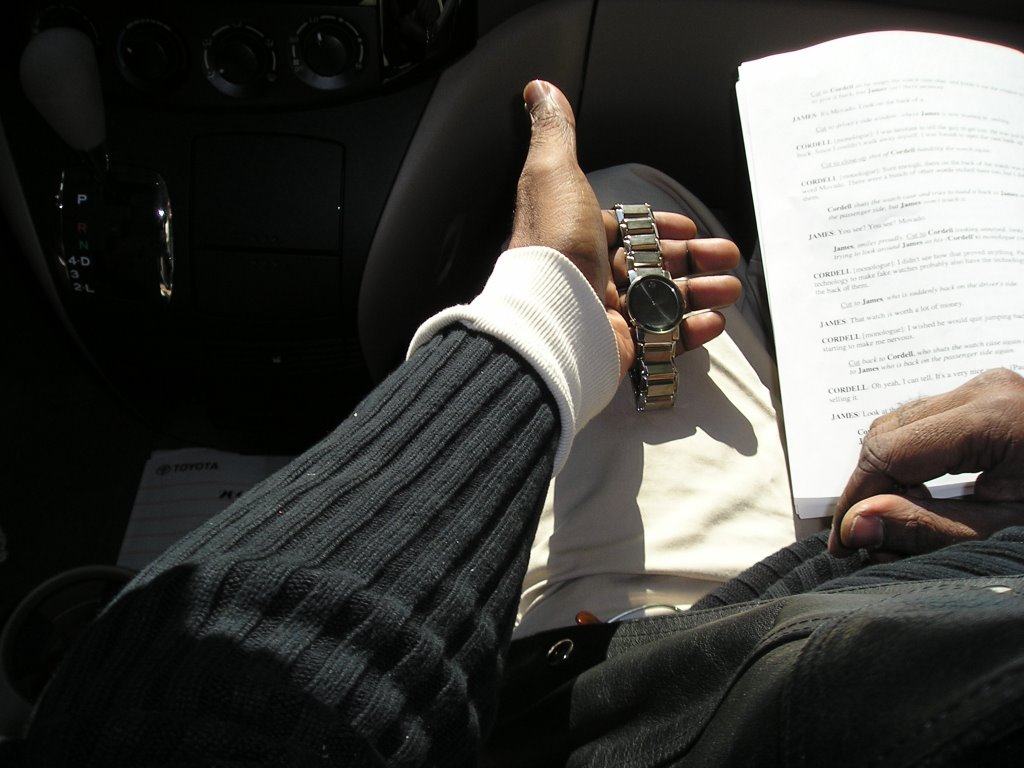
Movado (Rehearsal #1)


"I had no idea what Movado was. I didn't care, and didn't want to encourage the man by asking. I was tired from moving furniture, and not in the mood for shopping. But it looked pretty good, I had to admit. A silver metal band, with a black face, and one single diamond-like jewel marking the twelve o'clock spot."

From a film in progress. Read the original story, by Ed Hamilton, at
http://www.pifmagazine.com/SID/290/.

Sunday, October 30, 2005

Dazed and Confused: How Disco Changed My Life

Sometime in the 70's disco came on the scene. The songs were long and repetitious with lyrics which, more often than not, were either sappy or stupid or both. To say that you liked disco was to say you weren't cool. And if on hearing the phrase "Disco sucks," you didn't at least nod your head slightly or come back with a hearty "Right On" (an expression that was on its last legs when disco came around), then people would give you a funny look. It was the sort of look a communist sympathizer would get in the 50's during the McCarthy era.

Now, of course, disco is considered rather cool, if only for nostalgic reasons or as an example of 70's kitsch. Now it's all right to admit, even in the hippest circles, that you like disco. Now it's even all right to admit that as a teenager growing up in the 70's, you had a good time. I know now that I had a good time back then. It's just that in the 70's I didn't know what a good time was.

I was attending the local Jesuit high school then—Gonzaga College High School as it was properly called. I'd gotten there at a time when the Jesuits—who were known for the rigors of their educational system—had loosened up a bit. Thus, while the whole concept of the "me decade" was gathering steam, the Jesuits rebelled by belatedly getting into the hip spirit of the 60's.

Admittedly, some of their attempts at being hip were somewhat embarrassing, as when one teacher presented to our class the liner notes to Grand Funk Railroad's Closer To Home. "They are three who belong to the New Culture setting forth on its final voyage through a dying world..." he quoted, "searching to find a way to bring us all CLOSER TO HOME." It was an attempt by the Jesuits to use contemporary culture as a way of getting us interested in the classics: "Now compare the concept of Grand Funk's voyage to Odysseus's own journey home..." he said, "I think you'll be surprised by the similarities."

Those of us in my small circle of hip friends all looked at each other and snickered, "Oh cool, heh heh heh..." Still, we appreciated that he didn't try to find classical references in some disco song, because that would have been completely uncool. We stayed away from disco, preferring to find our classical references in things like The Mothers Of Invention's We're Only In It For The Money, Captain Beefheart's Trout Mask Replica, and The Velvet Underground's White Light/White Heat.

We played these records and got drunk and nasty with our drunk and nasty girlfriends—the kind of girls who, on meeting your parents, would offer them a beer or a cigarette as a way of breaking the ice. We were what people called "shirkers" or "slackers," which was a nice way of saying that we were fuck-ups.

But we were smart fuck-ups, with an odd assortment of quirks and obsessions, none of which had anything to do with high school or matters kids of that age are supposed to be concerned with—because we had our own concerns. We drank to excess and wandered around Georgetown, got stoned and caught double features at the old Circle Theater, dropped acid and hung out in the sculpture garden at the Hirshhorn: we needed that "edge" to enjoy ourselves. And in school when we were assigned books like A Separate Peace or Lord Of The Flies—books that were supposed to pique the interest of our young minds—we summarily ignored our assigned reading and turned to books like Fear And Loathing In Las Vegas, Naked Lunch, and On The Road.

But while my friends were getting bad grades or were on the verge of flunking out, I was doing well, especially in math and science. I had a knack for these things—it didn't take any real effort on my part. And in the summer between my junior and senior year, I went to the University of Georgia to study chemistry on a National Science Foundation grant. They set me up in a lab in the pharmacy school, no less, leaving me to work on my own. So when I was done each day with my assigned experiments I got to work learning how to make my own LSD. By the end of the summer I had it, in the form of an entire gallon of what we called "sugar water."

Back in Washington my friends and I began taking a lot of it—it was good stuff. But sometimes I was the only one taking any, and it was on one of these occasions, while turning the dial on my girlfriend's car radio from station to station, that I first heard the song. It began with a chunky bass line, a snapping of the high hat, and a vampish piano. And then the words—bold words, daring words—words which, while I was high on acid, seemed to speak to my soul. And the words were:

Fly robin fly
Fly robin fly
Fly robin fly
UP UP TO THE SKY!


And with the line "Up up to the sky" I took off. I was up there, in the sky. I was a fucking bird, a robin, flying over Washington, over the monuments, over the Potomac river, going who knows where. Eventually I reached another city—I hoped it would be Paris or London—but it turned out to be Baltimore. Still, this was the best trip I'd ever had.
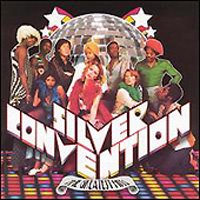
A week later I heard the song again over the sound system at the Post Cafeteria across the street from Gonzaga. Though I was completely straight this time I still liked it, loved it even. I thought that this song by The Silver Convention, "Fly Robin Fly," was the coolest thing I'd ever heard. And not only was it cool, it was also, to use a word which I'd never before ascribed to anything in my life, beautiful.

I immediately went out and bought the record—the twelve inch Disco Night In Purgatory mix. This version went on forever, building up slowly with the girls singing "fly robin fly" about a hundred times before finally taking off with that orgasmic "Up up to the sky!"

My friends thought I'd lost my mind—a teenage acid casualty. My girlfriend thought I was joking at first, but when she realized I was serious about liking this song she was not amused. If I actually liked that song what was next, she wondered. Going to football games? Church? The Senior prom?

Well, it wasn't long before I stopped seeing her and my other friends. I suppose that in the back of my mind I felt my old crowd was holding me back; and though it would bean exaggeration to say that "Fly Robin Fly" was what moved me away from them, this song was, at the very least, a catalyst for this departure.

Soon I was hanging out with the straight crowd, the kids the teachers liked, the kids who were supposed to be going places. I ended up doing all the typical high school activities. I joined the science club, the math club, the military strategy club; I got a part in the school play; I even went to the senior prom where the band played my song, the song that had inadvertently given me what my teenage spirit was looking for—namely, a sense of direction.

My old crowd I now considered unsafe or, at best, a dead end. But there were things about the good kids that bothered me too, and what bothered me most was that they didn't seem to have a proper sense of doubt about themselves, which was perhaps the very reason they were going places. Me, I had a different approach to moving ahead. I wanted to move ahead with my sense of doubt intact. It seemed, at that time when a strange sense of idealism was creeping upon me, to be a more honest approach.

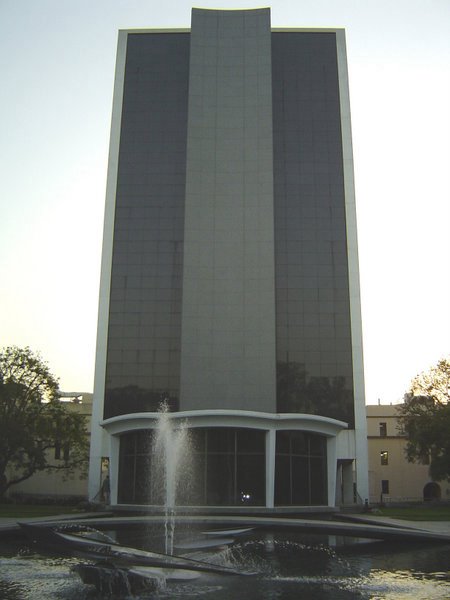
Towards the end of senior year my new friends and I had all been accepted at some of the best schools—Harvard, Yale, MIT. I was accepted at Cal Tech, which gave me a full tuition scholarship, room and board, even travel expenses. It wouldn't cost me a dime to go there, to sunny Pasadena, California with its palm trees and leggy blonde California girls. But now that I saw myself on a path to success and well-being, I realized that these were two things I was ill equipped to handle. After all, how on earth could a freaked out loser like me turn himself around and become some sort of a big wheel or one of the mover and shaker types? It could happen, I knew, but I also believed it would be unnatural and that success, for me, would be nothing more than a surface affectation, an act, a scam. Because although there were many things I'd believed in since I was a child—things like ghosts, UFOs, mental telepathy, and the lost continent of Atlantis—one thing I'd never believed in was the so-called American Dream.

Hence, I turned down the scholarship. I went to college in town—to Catholic University—a school where I'd have to pay my own way through. I turned away from science and math and studied English literature instead, which was something I was interested in but had no great talent for. In doing this I thought I was guaranteeing that I'd never become a success.

There's not much to say about my college years. Although it was a time spent mostly with the straight crowd, I still managed to avoid things like fraternities, school sporting events, and homecoming. I also tended to avoid the campus Rathskeller, preferring to do my drinking at Fred's, one of the bars in the local Brookland neighborhood near Catholic. When I did, through some odd circumstance, find myself at the Rathskeller my friends would put songs like "We Are Family" or "Disco Inferno" on the jukebox, songs I actually liked. But I kept to myself that I also liked bands such as The Sex Pistols, The Ramones, and Joy Division. Instead, I'd bring up the subject of "Fly Robin Fly." "It's kind of stupid," I'd say, "but also kind of catchy." "Yeah," they'd answer with a shrug, "it's okay." And then I'd go off to Fred's to drink by myself.

A couple of weeks after graduating from college I got a job driving a car out to some people in San Mateo, California, just south of San Francisco. It was a silver Mercedes Benz with power windows, cruise control, sun roof—the works. After dropping it off and getting paid, I went up to San Francisco and stayed with a girl I'd known from my high school days—someone from my old crowd. She'd moved out there a year earlier and was now, to my surprise, preparing to go to law school. She was the only person from my old crowd that I'd stayed in touch with. That I'd stayed in touch with her had to do, I suppose, with the fact that I'd always secretly had a thing for her. And I also suppose that the reason I took the job driving the car out west was not so much to escape Washington but to see her.

So there I was, in San Francisco, three thousand miles away from Washington, and things were going well. She and I got close very quickly. I was with her for a month, at the end of which I left town. And though I could say that I left because the sense of well-being that had come over me out there was beginning to frighten me somehow—that I still didn't think I could handle success in any form—the real reason for my leaving was that she'd decided, after a day of heavy reflection, that I really wasn't the sort of person she should be with. After all, she was going to law school in the fall, and I was someone who just liked to go out and get drunk, someone without any real plans for the future, someone without a dream.

I took the bus to Los Angeles and checked into a cheap hotel. I'd been there for two days when one afternoon I went to Pasadena and saw the Cal Tech campus. The next day I was on the bus again, making my way slowly back to Washington.

It was a long, depressing ride and somewhere in Texas—I think in the town of Fort Stockton—we had a one hour dinner stop. There was a diner in the bus station there, but I went next door to the local convenience store and got one of those small apple pies and a can of beer. I stood outside, ate the pie, then started on the beer. I was beginning to feel nauseous when a young guy who'd been on the bus came out of the diner carrying his boom box with him. He nonchalantly brushed back his hair, pressed a button on the boom box, then set it down on the ground. To my amazement it began to blast "Fly Robin Fly." As the guy listened to the song he started practicing his disco dance moves, shifting his feet and making these swirling motions with his index fingers.

It was a hideous sight and that song, which I had enjoyed so much in the past, now seemed equally hideous. Because just as Circe had turned Odysseus's men into beasts, "Fly Robin Fly" had transformed me into a creature of ambition at a time when I wasn't at all prepared for it, leaving me here, standing by the roadside in some two-story Texas town ready for a pointless confrontation with an itinerant disco punk.

"Turn that shit down!" I yelled at him.

He looked over to me and sneered. "Who are you to tell me what to do?"

"Just turn the fucking thing down," I yelled again, sneering back at him.

I'd been on the bus some twenty-four hours, while he'd only gotten on at the last stop. I was unwashed and unshaven. I was angry and disgusted. It must have made me look pretty tough. He turned the music down.

I finished my beer, then got on the bus and sat back, waiting for the ride to continue.

Originally written, at the behest of Gillian McCain, for the St. Mark's Poetry Project's reading Epiphany Albums: The Record That Changed My Life, in 1992.

Wednesday, October 26, 2005

Greyhound Itinerary 1979


Out of LA at 10 pm, down the San Bernardino Freeway,
past the procession of supermarkets and
highway motels, $9.95 a night, down
the orange and white fluorescent highway
a long way from home.

Southern California palm trees, at 3 in the morning
on a two lane that rides like a rollercoaster;
babies cry or kick just when you think you’re
falling asleep, and you have to step over the kid lying
on the floor in a puddle of piss to make your way to the restroom in back—
you hold yourself steady against the wall.

5 in the morning, a matter of miles to mountain time,
there’s a dead pony in the middle of the road and the bus
swerves, but gets a piece of it anyway.

Arizona, Yuma—one of the hottest cities in America,
7 in the morning.

Arizona—cactus by the roadside and
mountains baking in the sun—
you see a fire this morning, an old shack or something,
burning, behind stationary Southern Pacific railroad cars.

Tonight you’re in an 11th floor hotel room in El Paso.
Looking out your window you can see clear to Mexico.

Friday, October 14, 2005

Avenue Banana


Living on Avenue Banana in the 1990s was not a lot like drinking tea.
I looked up to the sky. You shouted at people driving by in limousines.
We ate rice and chicken, wondered what to do. You could go home
and watch your color TV or whistle on the way to the sink.
I could lie back on my mattress like a tiny buffalo and wave my hands
at the flies in the air or on my knee. Alone, I saw white paint chips on the ceiling,
felt the need for something green or golden. With you there was sometimes
a step in between, you sitting in my window reading a magazine.
Sometimes we were watching the same movie on different TVs.
Other times I gave you cigarettes like moonshine by the sea.
And though it wasn’t Paris in the 1930s and I couldn’t be Henry Miller
and you couldn’t be Anais Nin, the look in your eyes sometimes
made me think of you as Grace Kelly in bed reading a copy of Vogue,
and me as Jimmy Stewart, asleep by the window with two broken legs.

Sunday, October 09, 2005

The Death of the Cool (Pt. 1) (1995)

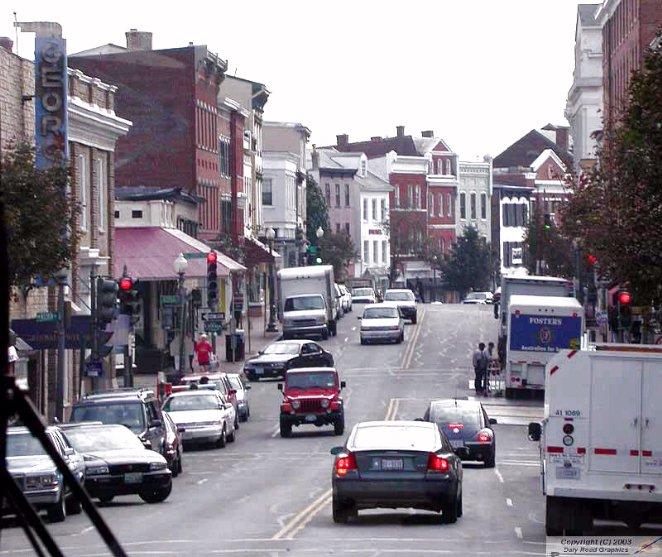
Life is cheap. Georgetown isn’t. It costs about six bucks to get what’s called a chicken pot pie at what passes for a coffee shop in the so-called heart of Georgetown. The pot pie is delicious: eating it you know that you’re putting extra air in the spare tire that hangs around your belly. Still, at six bucks a “pie,” you know it would be a lot cheaper for you just to open up a can of Crisco and shove it down your throat before washing it down with a cup of Maxwell House. But saving money isn’t what brought you to Georgetown. You came to Georgetown to spend it. To choose a new pair of pre-washed Calvin Klein jeans. Choose a Tommy Hilfiger jacket with a pattern that looks like the flag of Lichtenstein. Choose a shiny gold nose ring which from a distance will reflect the sunlight in such a way that it looks like a droplet of snot.
That wasn’t always the reason to go to there. Indeed, taking a weekend stroll through Georgetown isn't what it used to be. Where you once found the neighborhood where Washington DC's coolest would congregate, you now have something resembling one of those pretentious suburban shopping malls. Not those dreary strip malls you see in Rockville that were left over from Washington’s Middle Class Diaspora of the sixties, but that new brand of suburban mall: scaled down, red brick buildings you stroll through on your way to Starbuck’s for a decaf cappucino and chocolate chip scone; quaint little shops hawking either expensive clothing or ugly works of art.

Georgetown. It rose out of the swamp in 1751 when some Scotsmen, having forsaken their wee island’s traditions of kilts, bagpipes and haggis for the native American pleasures of smoking, established Georgetown as a tobacco port. With tobacco being a crop that was toiled over by slaves, it wasn’t long before Georgetown also became known for its slave trade, a practice which lasted until the 1862 when it was banned in the District.

Over the years Georgetown grew into a community that was about half black, half white—much like Georgetown University president from 1873 to 1882, the Rev. Patrick F. Healy, who, being the son of a black woman and an Irishman, was half black, half white. And that was pretty much the way Georgetown remained until the FDR’s New Deal brought change. When rich artists and intellectuals, at the behest of Eleanor Roosevelt, flooded the area like vainglorious creatures from the swamp in order to form a more perfect Bohemia.

In the early sixties Georgetown became a popular destination for window shoppers—out of towners who, with their fat, grubby fingers, sullied the wares in shops where Georgetown’s residents actually bought things. But then, as if Georgetown’s suddenly rising popularity with tourists weren’t bad enough, came the cool.

Starting somewhere around 1967, the fabled “summer of love,” Georgetown became the place for hippies to hang out, tossing their long hair on the corner of Wisconsin and M and flaunting the multicolored shirts and love beads which they believed were statements of protest against The Establishment. Young men with glazed eyes and scraggly beards proudly sold acid and pot in front of what would become (and then cease to be) The Key Theater. Young women, deeming undergarments as symbolic shackles of the military industrial complex, wore tie dyed tank tops and hip hugging blue jeans over their bare flesh as they hawked underground newspapers like The Washington Free Press or The Quicksilver Times. It was a time when revolution was in the air, when if you weren't part of the solution you were part of the problem; a time when some people felt the urge to rebel against even the most innocent of conventions, and rather than shake hands upon greeting one another would instead flash the peace sign. Then there were those radicals who, forgoing that quaint pleasantry, would immediately take off their clothes and "get it on" as the saying went.

It all looks pretty silly now, but back then hippie culture with all its myriad trappings was considered cool.

Over the years other things became cool. And just as hippies replaced the beatniks (who in their heyday lugged their bongo drums and facial hair to Dupont Circle), punks replaced the hippies. Coming after the punks were—among other things, and not necessarily in this order—grunge (music to sniff air-freshener to), cigar bars ("Look, Ma, I'm smoking a cigar and drinking a thirty dollar shot of cognac!"), the revival of big band music (for the purpose of a an obnoxiously self-conscious variety of ballroom dancing), and riot grrls (a movement which later metamorphosed into a gigantic book discussion group).

Of course, by the time the media picked up on these later manifestations of Cool they were already dead. Still, one begins to wonder: With hippie, punk, grunge, and riot grrl culture all dead, what's to take their place in the realm of The Cool?

The answer: Nothing. And though on occasion you will find things which people describe, for lack of a more precise term, as "cool," there is nothing left which truly fits that description. Because like Maury Povich shooting blanks into Connie Chung's womb back in the eighties, Cool has failed to reproduce itself. Because after having hung on to a pain ridden existence with the help of life support systems throughout the nineties, Cool has finally kicked the bucket. Because not only has cool been beaten down, it has also been executed.

That's right, Cool, with all its subsidiary attributes of non-conformity, fearlessness and casual sophistication is dead. Although there are those who are desperately faithful to the notion that culture and history are cyclic in nature, Cool is one thing that's not coming back. And although it's still raising a big stink as it wallows in the early stages of cultural decay, that stink will fade to the point where all we'll have left are fetid memories.

But let us not morn the passing of the Cool. Let us, rather, celebrate its demise. It served us well for a time, but that time has passed.

Sunday, October 02, 2005

Out Here In What (1985)


somewhere in Iowa
the beautiful young woman with
the ponytails
got off the Greyhound bus

to meet her dad.
It was Thanksgiving
morning and the sun was out,
here in what I guess is
the “heart of America” or

something close to it.
I looked out the window
and went back to sleep
with my overcoat and backpack,

ready to dream my way
through every rest stop,
every roadside attraction,
every crazy remark,

and the rise and fall of America.

Saturday, September 24, 2005

Jim Nabors (1996)

Jim Nabors first came to the public's attention on The Andy Griffith Show, playing the dim-witted character of "Gomer Pyle." Wearing overalls and a baseball cap—and speaking with a slow southern drawl—Gomer Pyle nonetheless surprised everyone with his booming operatic tenor. This was Nabors' real talent. Despite this great gift, Nabors insisted on pursuing his acting career rather than dedicating himself whole-heartedly to his music—thus, his starring role in Gomer Pyle, U.S.M.C.

When the show had run its course, Nabors found that, due to the vagaries of public yearnings, he was no longer in demand—either as an actor or as a singer. Forced into early retirement from show business, Nabors settled in Palm Springs, where on good days he sat on his back porch, gazing for hours upon the flowers in his garden. On bad days he stayed inside, the curtains drawn, drinking Pabst Blue Ribbon straight from the can and feeling bitter. Very bitter.

Nabors' final public appearance was a disastrous cameo on a Bob Hope Christmas special during which Brooke Shields taunted him mercilessly by threatening to beat him with a stick. One of the top three tenors of his day—and an inspiration to, among others, a young Luciano Pavarotti—Nabors' last act was to let himself be publicly humiliated by a celebrity who was even more of a has-been than he was, and who never possessed even a trace of his talent.

Originally published in Public Illumination Magazine, 1996.

Saturday, September 17, 2005

On These Days Driving (an excerpt from Undercover Angel)

That Chona Maki gets into the car with me and Carl is probably the greatest vote of confidence either of us has had in years. All she knows about me is that all day I’ve been buying drinks for everyone in the bar, and all she knows about Carl is that he’s got a job he hates. Of course, by now, she’s nearly as drunk as we are, and when I assure her that Carl is the best drunk driver in the Mid-Atlantic, she believes me.

“Alcohol on Carl acts like ritalin on a kid with attention deficit disorder,” I explain to her. For some reason I feel as if I’ve just told her a lie, but it’s true: Carl actually is a better driver when he’s drunk than in those few hours in the day when he’s completely sober. “Where alcohol makes the rest of us sloppy, with Carl it’s like pressing the turbo button on your computer. He gets quicker. Sober, he’d never have been able to figure out that you came here from San Francisco, and that you’re half Japanese, half Filipino, or any of that other shit.”

Carl was right about everything. Chona even showed us her driver’s license, which showed her address in San Francisco, to prove she wasn’t playing with us when she said she actually did just get here from California.

“Well come on, let’s go,” Chona yells, sitting next to Carl in the front seat. We have no idea where to go. All we know is that it’s seven in the evening and that sometimes even drinkers like us need a little fresh air.

Carl presses a button on the dashboard, and the top of his ’72 Camaro lifts up, then slides down behind us. He presses another button and all the windows roll down.

“Well, all riiiight!” Chona exclaims. “Let’s get this motherfucker on the road!”

Carl steps on the gas and we’re off.

About half an hour later we’re trying to find this place called Dickerson Quarry, when we realize we don’t have anything to drink. We’re out of DC now, having driven up Connecticut Avenue, dodging through what was left of rush hour traffic, at about fifty-five miles per hour—well under the highway speed limit.

“As long as you’re going under the highway speed limit,” Carl assured us, “cops here don’t much care how fast you drive in town. In fact, they’ll respect you a little more if you go about thirty miles over the city speed limit. Cause if you’re going that fast in town, they figure that you know what you’re doing. And goddamnit, I know what I’m doing.”

I’d remembered Dickerson Quarry vaguely as a place I went once when I was a teenager. A quarry about the size of a football field, it had been filled with water since sometime in the 50s. Some friends of mine in high school knew about it and went there sometimes for the purpose of what we discreetly referred to as meditation. If Dickerson Quarry hadn’t been pumped out and paved over to make way for a strip mall in the quarter century since I’d last been there, it would be a good place for us to hang out and drink. So if we were going to go there we’d better get us something to drink.

Carl jerks the car off the main road and into a strip mall. Moving slowly, it feels as if we’re slithering along the ground like snakes as we check each storefront for the word “liquor” or for some big ugly poster advertising beer. And for all we know, and for all I remember, we could already be at Dickerson Quarry. Or where it used to be, anyway.

On spotting a bright red neon “liquor” sign, I hand a hundred dollar bill to Chona, who then lifts herself from her seat and jumps over the car door. A few minutes later she walks out of the store cradling a big shopping bag in her arms. Handing the bag to me, she jumps back in the car as I start unloading the bag’s contents: a fifth of Jack Daniels, a Fifth of Schmirnoff, three six-packs of Dos Equis, and bag full of lemons.

“Whoa, I love you, baby,” Carl says on seeing the three six-packs.

“Don’t be an asshole,” Chona scolds as she twists off the cap and hands a bottle of beer to Carl.

Carl takes a swig then slides the bottle between his leg and the car door as we start to move again. Pulling out a knife, Chona slices open a lemon, takes a gulp from her bottle of vodka, then bites down on one of the lemon halves. It’s sunset now, and with the wind blowing her silky dark hair behind her, she looks at Carl then at me and whispers, as if she were telling us a secret, “This is cool as shit.”

By now the idea of Dickerson Quarry is far in the past for us. And as we move ahead into the night we feel no need to replace it with another idea. At least not yet.

We pass through suburb after suburb, from Aspen Hill into Olney. Past a McDonald’s and towards a Burger King. A Chevy dealer squeezes us in on the right while a Toyota dealer swerves ahead of us on the left. Safeway signs metamorphose into Food Lion signs then into things not even Carl nor I have ever heard of.

“We’re now entering the fabulous suburb of... Brookville,” I announce to Chona. “It’s like this all the way to Baltimore. It’s the true eighth wonder of the world—this gigantic strip mall that stretches for thirty or so miles from Washington to Baltimore.”

Chona looks from side to side. We’re on some country highway now, the supermarkets, car dealers, and fast food restaurants having suddenly disappeared from sight. The only thing we see are the blurry images of trees that whip past us. Ahead there’s nothing but darkness until Carl finally turns on the headlights.

“Wow,” Chona says, “doesn’t this fucken city ever end?” She lets out a burp.

“Well, yes and no,” I say, mumbling to myself. I don’t bother to explain.

Suddenly we’re all silent, feeling the rise and fall of the road as we move over the landscape. We realize this isn’t some one night joyride: we’re in it for the long run. What’s more, there’s no need to say this out loud. But alcohol is like that sometimes. Once you get to the point when you’ve lost the ability to speak—after hours and hours of drinks and rambling, effortless conversation—you also tend to find that you’ve lost the need to speak as well.

In a moment Chona is slumped back in her seat. In another the sound of her snoring merges with that of the wind rushing over the car. As she coughs in her sleep, the open bottle of vodka slips out of her hand and its contents pour out between the passenger and driver seats. I breathe deeply, taking in the blend of fresh air and vodka, and lay down in the back. While I’m still able to open my eyes, I make sure to look at the stars overhead: they turn blurry and start to spin as they go into orbit around me.

From a novel in progress.

Friday, September 09, 2005

The American Dream Will Start in the Minds of the Deprived and in the Hearts of the Depraved (an excerpt from Undercover Angel)

A week later, on a Friday night, I got a message that a woman named Mary Lindy had called. The name sounded familiar but I wasn’t quite sure where I’d heard it before. Later that night she called again.

“José,” she said in a thick Southern accent, “this is Mary Lindy from the Association of American Physicians.”

I then remembered that I’d met her at a job interview there—a job I didn’t get. It was a strange hour, I thought, to be telling me that they’d decided to hire me after all—but that wasn’t why she was called.

“I’m calling to let you know that the reason you didn’t get the job at the AAP was that you were discriminated against.”

Suddenly I felt lightheaded. Like a man who had picked the winning numbers in the weekly Powerball drawing, I was in a state of shock—but not because I was a winner. It was because now, after all these years, I finally had evidence of what was preventing me from becoming one of America’s greatest heroes.

Mary went on to explain that Kate Powers, the woman in charge of hiring for the job I applied for at the AAP, wanted a white Catholic woman for the job. When looking through the resumes they’d received, Kate Powers would immediately toss aside the resumes of people with foreign sounding names. That I got called in for an interview was only because Mary saw my resume and—thinking I’d be perfect for the job—insisted I be brought in for an interview. But as far as Kate Powers was concerned, my race and sex negated all my other qualifications for the job.

Mary suggested I meet with her so she could explain the situation in detail. Since she and her boyfriend lived in a group house in Adams-Morgan, just a fifteen minute walk from my parents’ house, we decided to meet there the following afternoon.

Mary and her boyfriend, Dan Thompson, were both from Charleston, South Carolina and met when they were in college there. Mary—a tall, slim woman who dressed like a mod Londoner from the sixties—didn’t look at all like a southerner. When I first met her I was astounded to hear the slow Southern drawl that seemed to float from her mouth when she spoke. On the other hand, her boyfriend, Dan, looked exactly like I thought a Southerner should look: tall and paunchy and dangling a thick beard from the bottom of his face. I knew as soon as I saw him that he was also one of those people who needed at least two six packs of beer to make it through the day.

We discussed our situation for about an hour. Mary had already gone to the Equal Employment Opportunity Commission and was confident that the AAP couldn’t take any action against her without risking further damage to themselves. “If you want to pursue this, you should also go to the EEOC,” she advised, “and speak to a lawyer too.”

Dan’s advice was of a more philosophical nature. “Don’t let those assholes fuck with you,” he said calmly.

Being broke, I had nothing to lose: I was going to go ahead with a lawsuit. With that decided, Dan asked if I wanted a beer. Soon we were up on the rooftop deck of the house, finishing off the second of two six packs and opening up a fifth of bourbon. Since the bathroom was down a flight, Dan and I started pissing off the roof.

“I do this all the time,” Dan said as I listened for the sound of urine hitting the alley three floors below us. Dan had a Ph.D. in Philosophy, but at the moment he was unemployed. “Most of the people teaching in universities nowadays are assholes,” he maintained. “I wouldn’t walk across a quad to piss on their shoes. It ain’t worth it.”

It was after midnight when I finally left. On the way home as I passed all the bars in Adams-Morgan I made a resolution—a resolution that if I were to win this lawsuit I would never go home at this laughably early hour. I’d drink until last call, roam the deserted streets at four in the morning with a couple of other professional drunks or by myself even... in those perfect hours when the traffic signals show neither green or yellow, but a bright flashing red keeping time like a heartbeat.

That was my favorite time of day, because during those few hours before dawn was when I owned this town—or any town. Nothing bad had ever happened to me between the hours of three and six in the morning. I’d been out on the street hundreds of times in the those hours, in Washington and New York, wearing grungy clothes or wearing my best suit, and nothing had ever happened. The rest of the day was when the bad shit happened. I’d been mugged at eight in the evening, shot at at two in the afternoon, hit by a car at nine in the morning. But during those perfect hours nothing bad had ever crossed my path, no matter how drunk or reckless I was. If only I had the money I would stay inside, drinking heavily, heroically even, before hitting the streets at three in the morning. Stumbling down the sidewalks past the muggers, beggars and junkies, I’d struggle to hold my head up high. But even if I couldn’t, I’d still get away with it, and more.

After all, I had a dream—and drinking was going to an important part of it. Mary and Dan’s dream was to leave Washington and move up to New York where they’d work their way up to a swank apartment in the Chelsea Hotel. New York may have been part of my dream too—I wasn’t quite sure yet. All I knew was that most of my friends in DC were telling me, “You’re not going to get anything.” They’d say it scornfully, as if I didn’t deserve to win the lawsuit. As if the idea of me actually being discriminated against was absurd and that for me to pursue this was a threat to their own dreams.

If there’s one thing I’d learned over the years, it was that people didn’t like anyone fucking with their view of the world, and pretty soon I lost most of my old friends in DC. My drinking buddies now were just Mary and Dan—though later Carl would come to town, intent on just passing through. But when the girl he came here with hooked up with some guy in the Hell’s Angels everything changed.

With his version of the American Dream shattered by the prowess of a five foot two Hell’s Angel who called himself “The Drummer,” Carl lost the will to move. Soon Carl realized that, like me, he was stuck here in Washington. Stuck in this stupid little hick town that holds sway over the entire world.

From a novel in progress.

Monday, September 05, 2005

My Multicultural Drinking Life Pt. 2 (an excerpt from Undercover Angel)

I came to the conclusion that my future in New York had been in Claudia Schiffer’s hands. Claudia—with her tiny, round eyes which always seemed to be staring at the ground on the day I spent with her—was my last chance in New York. If she’d given me a little bit of time I could have gotten myself started again, but my smell got in the way of commerce with her.
I walked all the way home from the Shandon Star, down to Avenue B and Third St. Before going up to my apartment I stopped at the Chinese carryout on the corner and got an order of sweet and sour pork. Opening the door to my building I saw my landlord.

“José Baby!” he yelled out. Jack always called me Baby. He was in his mid-sixties, and with his full head of dyed black hair looked like someone who, if he were living in a small town, would be running the local bowling alley. Somewhere in the back of his mind he must have remembered that it was hip to call people Baby. That, plus his inability to resist any opportunity to make a pun with my name put the words “José Baby” in the back of my mind for the four years I’d been living in the building.

“Hey, Jack,” I answered quietly. I was hoping he wouldn’t bring up the subject of my late rent check. All Jack did was point to the bag in my hand.

“Chinks?” he asked. Maybe he thought he was being hip by using the word “Chinks” with me.

“Ah, yeah,” I said.

Jack nodded, saying, “Yeah, it’s good stuff, yeah!”

The next day I told Jack I was leaving, that I’d just leave him my security deposit in lieu of the back rent I owed. It was all right with him.

“José Baby,” he said, “if you come back to town, come see what I’ve got available.” Jack was sad to see me go, as was the old Puerto Rican lady who lived next door to me.

“You don’t know who move in now,” Anna Garcia said. “Too many junkie people here.”

Being just a sullen drinker, I was civilized in Anna’s eyes. But the crackhead who lived down the hall and the people she’d sometimes see shooting up in the foyer were another matter. Of course, if I had the money, I would have stayed. And although the most I ever did for Anna was to help her carry her groceries up the three flights of stairs, I now felt obligated to help her out somehow.

“Someone nice will move in,” I reassured her. “Jack’s probably tired of those people who pay the rent in cash.”

Anna gave me a worried look. She didn’t understand what I meant.

“It’ll be all right,” was all I could say.

I packed my things into a U-Haul truck and drove down to Washington the next day. There I was, back in the house I grew up in, living with my parents and my younger brother, BB.

The traditional role of a good Filipino son was to live at home, helping out the family, until he got married—preferably to a nice Filipino girl. BB was following tradition, keeping a steady job at the Library of Congress as he helped my Mother and Father, who were both retired, with the bills. I strayed from that traditional role when I left the Library, left home and moved to New York. My older brother, Ray, had left home too and moved to Baltimore, but he’d gotten married. As for me, not only had I left home before getting married, but I was now back and had no money to speak of. Not that my parents weren’t glad to have me back in Washington, but somewhere in the back of their minds the term “fuck-up” must have seemed the most accurate way to describe me.

So I went out looking for work—not writing gigs, but straight jobs. I sent out resumés and those few times when I was actually called in for an interview I’d refrain from drinking the night before: I didn’t want the stench of bourbon to keep me from gaining entrance into the realm of the nine to five workday. But my one night stands of clean living didn’t help, because no matter how sharply I dressed, how charming I acted during interviews, I couldn’t get a job.

It would have been easier for me if I were white. Of course some people I knew from the time I worked on Capitol Hill were skeptical of this.

“It’s not because you’re Asian,” Joe Carone told me. Carone was my bartender friend at the Tune Inn two blocks down from the Library of Congress. “It’s because you’re a fuck-up.”

Carone was telling me this at a time when all the bartenders at the Tune Inn were alarmed that the grocery store next to the Tune Inn had been bought by a Korean family. Being just a fuck-up, I posed no threat. But a hard working Korean family, that was another matter.

“They’re taking over everything!” was Bob Dill’s response when he heard about the sale. Dill was another regular at the Tune. A mechanic, he was at the Tune everyday like me. And although I’d been drinking with him at the Tune for several years—sometimes at the barstool right next to his—we had never exchanged a single word.

Which was the way it was with some people—for them I just wasn’t there. And though before I’d gone to New York I kept quiet about these things whenever I drank on the Hill, I was no longer the mellow drunk I used to be.

“I don’t think you need to worry about the Koreans taking over your grease monkey gig,” I said to Bob Dill. “They wouldn’t want it.”

Bob Dill raised his chin and lowered his eyes at me. “Was I talking to you, asshole?” he yelled.

“Fuck you,” I snapped back. When I was drunk the sharp smartass comments didn’t always come that easily.

“You fucking gook!” he screamed as he shoved me off my bar stool.

I got back up and lunged at him.

Of course, everyone thought it was me who had started the fight—and I had—though it was Bob Dill who threw the first punch. Well, actually it was me who threw the first actual punch, but I wouldn’t have raised my fist had Bob Dill not shoved me off my bar stool. Yet that was my first victory that night: getting someone like Bob Dill to recognize my existence. My second victory was when I broke his nose and knocked him out. It was just a lucky punch; and despite the running commentary from a drunken Senate staffer—who noted with sadness, “And the karate chop takes him down for the count!”—all I was doing was wildly throwing straight-ahead punches.

Although I was the victor, I was no hero in the eyes of the crowd which had suddenly turned silent. “It wasn’t fair,” I heard someone say, “he knows karate.”

I stood there for a moment, remembering the dedication in Hartzell Spence’s biography of Ferdinand Marcos, For Every Tear A Victory:
TO
FERDINAND EDRALIN MARCOS
WHO: had he been born white-skinned on the American
mainland rather than brown-skinned in the
U.S.Philippines, would today be counted one
of America’s greatest heroes.

As ludicrous as the dedication may have seemed at first, it was nevertheless true. Marcos would have been a hero. And he could have gotten away with everything – with robbing his people and killing his rivals. His reign over the seven thousand plus islands of the Philippines would have been described as a story worthy of Shakespeare with Marcos being remembered fondly as a tragic hero.

I stood there for a moment over the unconscious, bloody-nosed head of Bob Dill. I stood there looking like the bad guy from some stupid parody of West Side Story.

A few days after my first round TKO over Bob Dill I ran into Joe Carone on the street.

“They don’t want you coming in there anymore,” he said, shaking his head.

But I already knew.